Conversations and Counternarratives: Shalem Grad Reports on the Middle East
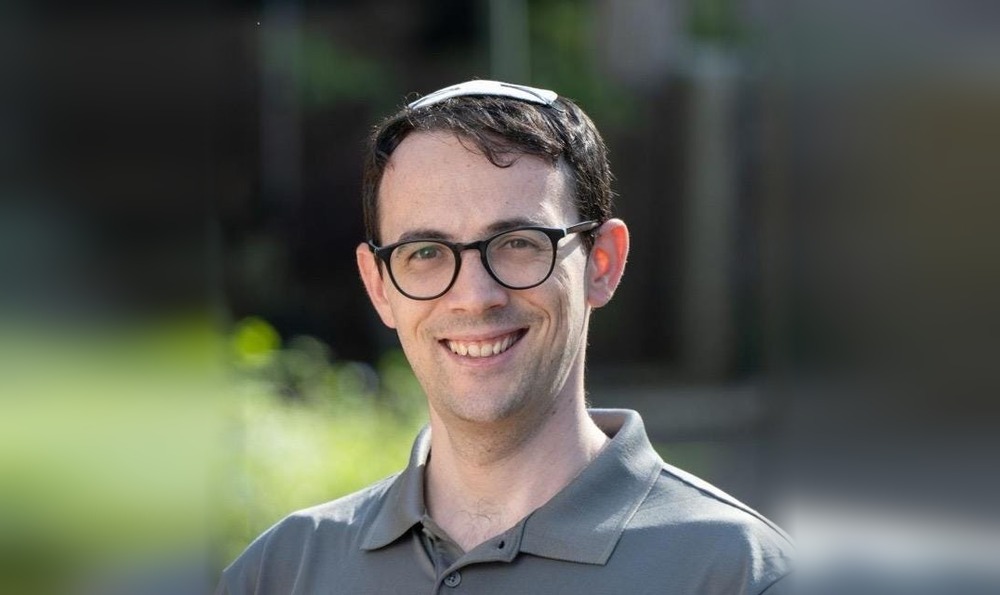
Of all his favorite courses during his time at Shalem, Middle East analyst Ohad Merlin ’20 says the most formative ones weren’t about the modern Middle East at all. Nor were they his courses on the Arab Israeli conflict, or even his tutorials in Persian—which, along with Arabic, English, Spanish, and Hebrew, he now speaks fluently. Rather, he says, he loved reading the Sumerian and Akkadian epics Enuma Elish and Gilgamesh, as well as ancient Greek and Roman literature like the Odyssey and the Aeniad. More than anything else, the experience of reading these primary texts “opened my eyes to a completely different way” of relating to the world.
“Incredibly, this was the first time I realized that, despite our cultures being fundamentally different, we are all connected,” explains Merlin, who lived during elementary school first in Panama and then Venezuela before returning with his family to his native Israel. “There would be no Jewish philosophy without the polemics with medieval Islamic thinkers, and we can understand our own scriptures better when we maintain a deeper grasp of other worldviews and narratives that arose in the Near East. It was an important lesson, and one that continues to inform my career in journalism.”
That career now boasts tens of thousands of followers on his X, Telegram, and English-language Substack account, including a sizeable Arab following whom Merlin “strives to engage in respectful conversation.” He notes that his experience as a press attaché at the Israeli Embassy in Amman before studying at Shalem provided plenty of opportunities to hone his skills in this regard. “Among other things, I was responsible for the embassy’s public diplomacy, which sought to create a common discourse with average Jordanians,” Merlin says. “It was sobering, but also great practice for everything that came after.”
Describing what he does as “explaining the political, security, economic, and social developments in the region” to both policymakers and the public alike, Merlin adds that since October 7, 2023, that description has taken on a new dimension. In addition to explaining, he’s also educating, too.
“Whenever I wrote an article or posted after the Hamas massacre,” he says, “I made it a point to go deeper. For example, to show that Iran and Qatar were behind the attacks. Without understanding the bigger picture and making the connections, it would be easy for someone to criticize Israel’s actions as disproportionate or unnecessary.”
Recognizing the bigger picture is something Merlin also credits to his time at Shalem, where he “learned to get comfortable with complexity, and resist the urge to fall back on simplistic theories.” Shalem also helped Merlin advance his career in a practical way: During his junior year, the college’s Paul E. Singer-funded Impact Office secured him an internship with the Jerusalem Municipality’s advisor for East Jerusalem affairs. “I used my Arabic skills and the knowledge of Arab culture I’d developed at Shalem to try and understand East Jerusalem residents’ aspirations, concerns, and complaints,” he says. “That understanding would then form the basis of our strategic plans and communications.”
Thanks in large part to his experience at the municipality, Merlin says, he was hired post-graduation by Argyle, a strategic-consulting nonprofit that analyzes social-media campaigns targeting Israel. That’s where he was on October 7, and why much of the period that followed—when he wasn’t serving in the reserves in army intelligence—were spent investigating the efficacy of pro-Hamas social-media advocacy.
“What we saw was that the foundation for many of the campaigns that dominated the Internet once war broke out were in fact laid long before the first Hamas terrorist even breached the fence,” Merlin says. “They were the digital version of Hamas’ underground tunnels, built in preparation for eventual use.” Merlin’s analyses helped Israel design and implement countermeasures to combat the false narratives.
When Merlin was hired as a correspondent and then promoted to analyst for the Jerusalem Post, he determined to use his new journalistic platform to the best possible effect. To think through how to leverage his reach, he returned to the place that helped grant him his start: Shalem.
Shalem+, an in-residence alumni program funded by the Gracefield Foundation that affords Shalem graduates the time and funding to develop a significant professional project, “was a chance to learn from the experience of my peers in different sectors,” notes Merlin. “That in itself was deeply meaningful, but most of all, the program gave me an opportunity to step back and develop a plan for my career. The college helped me turned aspirations into actionable steps.”
For Merlin, one such step included his current position at the think tank MIND Israel, which advises Israeli leadership, agencies, and other parties involved in policy on issues related to national security. He points out that MIND’s emphasis on practical, “bottom-line” research-based recommendations is an excellent complement to his social media-based political commentary. “The fact that my commentary draws from rigorous primary research means that I can offer something many journalists can’t, and makes readers more willing to engage with me.”
He adds that in the current reality, engagement is itself a type of victory.
“It’s very difficult to cut through the noise, even more so to change people’s minds,” says Merlin. “But my own followers attest to the real thirst out there for depth. The truth may not win every media battle, but if others like me keep doing what we’re doing, I believe we can help it win the war.”