Strengthening Education to Strengthen the Northern Periphery
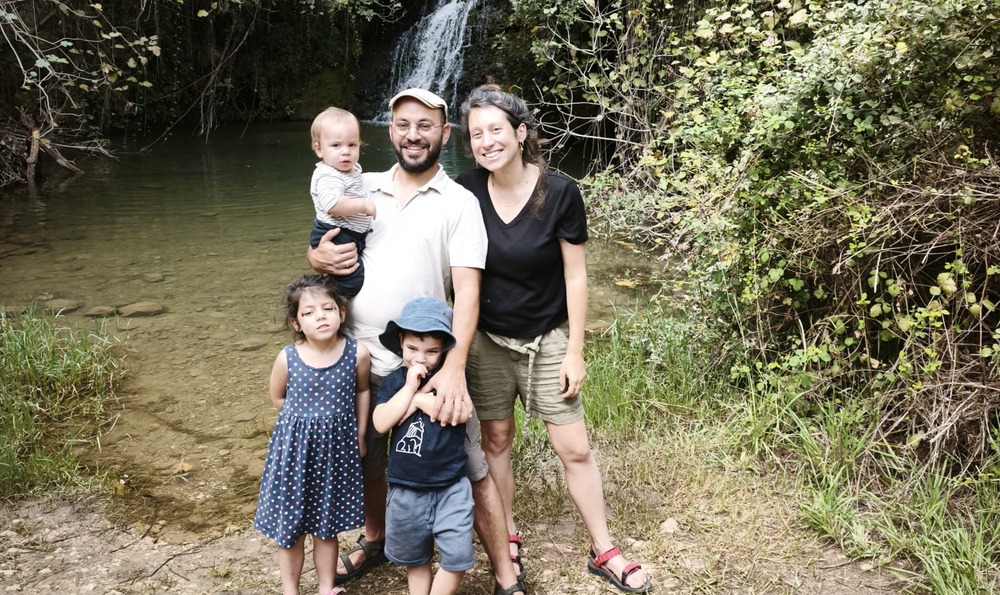
Several months back, Enya Koblenz-Arnon ’21 moved with her husband and three young children from their home in the Upper Galilee to the northernmost town of Metula. Surrounded on three sides by Lebanon, Metula’s approximately 2,500 residents were evacuated after October 7, 2023; on account of nearly 14 months of near-daily Hezbollah rocket, missile, and drone fire—not to mention heavy damage to homes and infrastructure—they remained displaced for almost two years.
Today, less than half have returned.
“For the rest of the country, the war feels over,” says Enya, “but in Metula, explosions are our daily soundtrack. By absorbing the bulk of the security threat from Hezbollah, Israel’s North protects the rest of the country and allows for a sense of normalcy.”
Why, then, take the risk by moving there with her young family?
“Because this is true Zionism,” she says. “Israelis talk about how beautiful the North is, and how it’s so green and great for hikes. And it’s definitely all those things. But we also need to talk about how the North is Israel’s most important frontier. And like all frontiers, its flourishing depends on pioneers.”
Born and raised in the northern moshav of Amiad, Enya always knew when she left the North—first to study in a pre-military leadership academy, and then after the army, for her bachelor’s and then master’s degrees—that she would eventually return. What she couldn’t know was how her perspective on and relationship to the region would be changed by her experience—in particular, her time at Shalem.
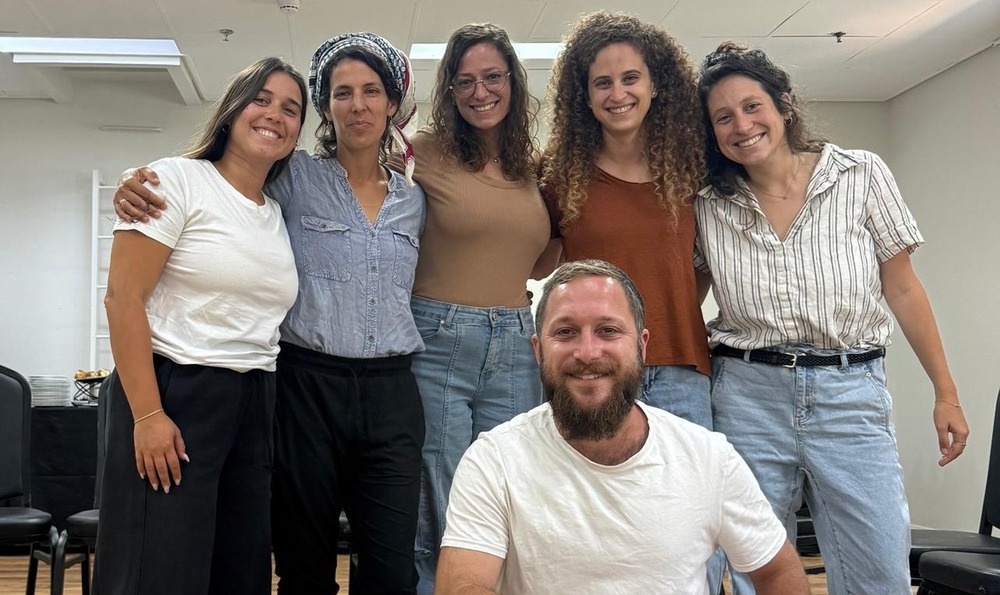
Enya and her team from Hamerchav Hachinuhi Hashalem in Kiryat Shmona
“The educational system in the North has always been problematic,” says Enya, who is starting a doctorate in education at the newly established Tel-Hai University of Kiryat Shmona in the Galilee, a key player in the efforts to strengthen education in the region. “When I was a student, there was a sense in the schools that ‘this is the way things are,’ and it’s pointless for students to aspire to more. Shalem was the first place where the idea of growing, improving, and opening one’s mind was integral to the learning process. I wanted to bring that approach to education back home with me.”
And she did: After graduating from Shalem, she began working at Hamerchav Hachinuhi Hashalem (“The Whole Educational Space”), a national nonprofit that bridges the gap between formal and informal educational systems. Dedicated to providing disadvantaged students with equal learning opportunities, Hashalem builds cross-sector partnerships with municipalities, the Ministry of Education, corporations, and more to leverage a region’s strengths into holistic educational content.
“Our starting point is the belief that education is the responsibility of the entire community,” explains Enya, who began her work for Hashalem in Jerusalem while pursuing her master’s at the Hebrew University. Afterwards, she continued her role as a national manager for the organization from her new home in the Upper Galilee. “Schools shouldn’t be siloed off from the rest of their city or region. Instead, we should take the best of what those cities and regions have to offer and use them, not only for tourists, but also for the benefit of local schools.”
Having seen firsthand the impact of this holistic approach on students’ sense of engagement and motivation, Enya asked, in the wake of October 7, to be appointed Hashalem’s director for the Kiryat Shmona school system. “On the one hand, the town was devastated by the war and extended displacement,” Enya says. “On the other hand, those who came back had seen what health services, roads, and schools were like in other parts of Israel. Suddenly, what was good enough before wasn’t acceptable now. I wanted to harness that dissatisfaction into innovation.”
One such innovation was integrating the weekly meetings of Israel’s ecosystem of youth movements into the school day itself. These movements, which provide disadvantaged youth with a strong network and ethos of social engagement, are key to overcoming socioeconomic gaps.
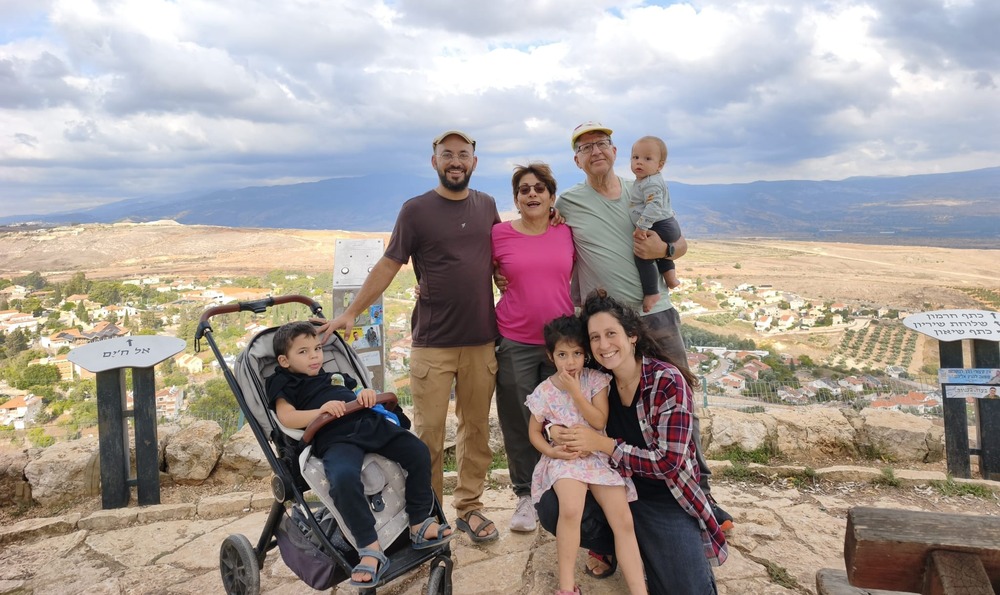
Enya with her husband, their children, and her husband’s parents at the Dado Lookout in Metula, overlooking Lebanon and the Hula Valley.
“We saw that students were going home after school and not leaving again in the evening for their youth movement activities,” Enya recalls. “So we made the meetings take place at school, right after the day ended, and surprise—participation increased significantly. We did the same thing with medicine: Students who might be interested in studying medicine often don’t know what courses they need to take in high school, what skills they need to develop, what experience would be helpful. For kids in Tel Aviv, it’s a well-worn path, but for kids up North, it’s a mystery.” Enya worked with the local hospital, health clinics, and other organizations to create a year-long program that introduces students to careers in the health sciences and helps them prepare for a degree in medicine after the army.
For Enya, this work is the key to making the North a place where Israelis want to live.
“There’s no doubt that the North has its challenges,” she says, “but in the field of education, we have the resources, the will, and the sense of urgency required to make the region the national leader.”
Ultimately, Enya concludes, she believes the North will be not only a place that people don’t leave, but to which they come specifically for better educational opportunities. “If we in the North are the new pioneers, then educational innovation is our plow. This is how we’ll strengthen not only the periphery, but our entire nation.”