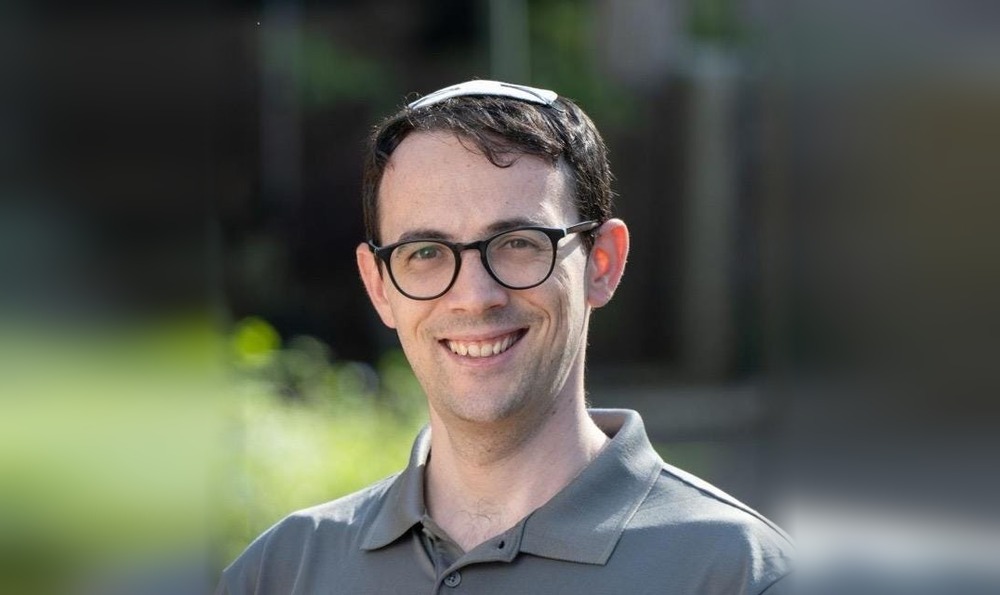
Shalem Graduate Matanel Bareli ’20 Returns to His Intellectual Home
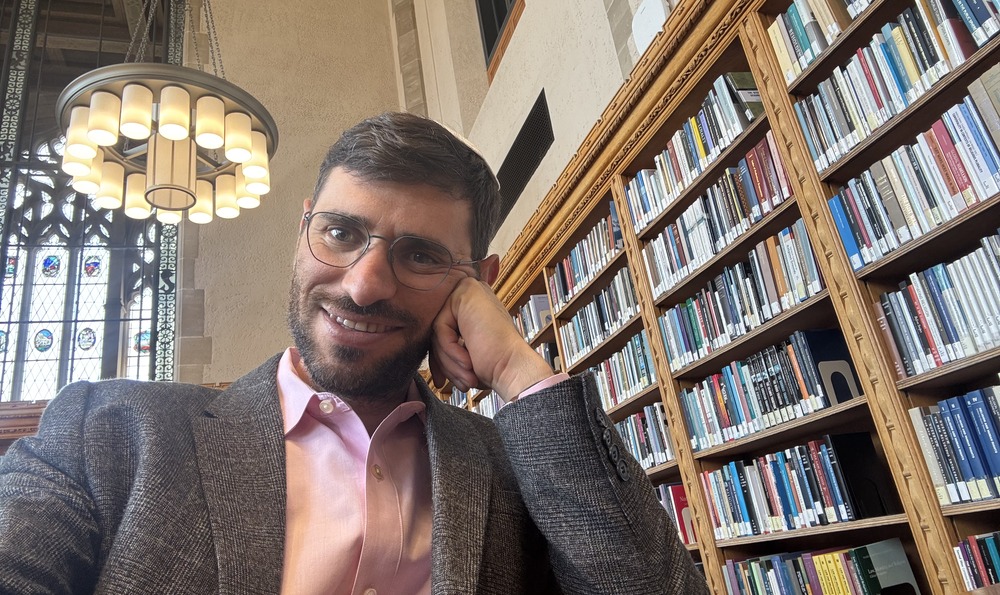
When Dr. Matanel Bareli ’20 recalls his first encounter with political philosophy during his sophomore year at Shalem, he describes the experience as “suddenly seeing an entirely new landscape.” Explaining that the course introduced students to political thinkers from ancient Greece to the modern era, he credits it with providing “an intellectual foundation for practical influence.” To date, this influence has led—after he earned first his master’s and then his doctorate in constitutional law from the Hebrew University—to Bareli’s editorship of two journals: Hashiloach, a prominent journal of culture and public policy published by Herut—The Center for Israeli Liberty, and Religia, a journal of religious thought he co-founded. The tenth issue of Religia is slated for publication soon.
But no less important than the knowledge he gained, says Bareli, was the feeling of a new world opening before him, where ideas shaped the course of history—and could shape the future, too. This is the feeling Matanel hopes to impart when he returns to the Shalem classroom this fall, this time as a lecturer for the same course.
“I’ve always wanted to teach at the place that was both my intellectual home and springboard to action in Israeli society,” says Matanel. “Shalem students are unique, both in their genuine interest in learning and their desire always to go deeper and explore things critically. When [Dean of Faculty Prof.] Leon Kass asked if I would teach the very course that sparked my own academic journey, I saw it as both a privilege and an opportunity.”
That opportunity, it turned out, included the chance to reimagine the course itself, together with Kass and co-lecturer and University of Chicago graduate Dr. Yiftach Ofek. When discussing what to include—discussions he calls jokingly “exercises in philosophy themselves”—Matanel kept in mind his ultimate goal: helping students see a new landscape, too.
“I want my students to have the experience I had,” he concludes. “To look up in the middle of the semester and see a world they didn’t know was there, and realize they’re standing in it. To feel both awed and empowered at once.”
What is the structure and content of your course on political philosophy?
We aim to introduce students to political philosophy by means of three major works: Aristotle’s Politics, John Locke’s Second Treatise of Government, and Alexis de Tocqueville’s Democracy in America. Each work focuses on a central theme—specifically, the nature of political life, liberalism, and modern democracy—while also raising questions like, what does it mean to be a good citizen? What’s the ideal relationship between politics and economics, the purpose of law, and the importance of private property?
The advantage of this approach is that beyond granting students the ability to ask critical questions and formulate considered answers, it will also help them read other great texts. The slow, careful reading of a few foundational works builds the muscles required to engage other difficult works, as well as to wrestle with complexity. It’s a valuable skill, and one that’s in increasingly short supply in today’s hurried and distracted world.
You’re teaching this course at a moment when political philosophy feels anything but abstract, and the stakes of making unwise decisions are extremely high. How do you expect the current situation in Israel to impact what happens in your classroom?
In truth, even before the semester began, I had to contend with Israel’s new reality: My next call-up for reserve duty starts in the first few weeks of the academic year. I was worried about the impact of my absence on my students. I was also worried that, having just begun teaching the course, I wouldn’t be able to focus on my reserve duty and be the kind of soldier Israel needs me to be.
After working out the scheduling so that I could do both, I realized that my work for Shalem isn’t like any other job. I see it as a kind of contribution to the state—preparing the young people who will go on to be leaders in key fields. Just as reserve duty is one kind of contribution, teaching at Shalem is another. In fact, they complement each other, since one is a way of protecting the state’s existence, and the other a way to ensure that its citizens believe its existence is a necessity. They’re two sides of the same project, and I plan to share that thinking openly with my students at the start of our time together.
What do you most want your students to take away from your course?
In a word: responsibility. Already in ancient Greek texts that dealt with political philosophy, the emphasis was on the role of the citizen in the city-state—what virtues did he need to cultivate and what activities did he need to undertake to ensure a flourishing polity? My students may come up with different answers to those questions, and they’ll make for a meaningful debate. But most important is that they recognize that citizenship is an active verb, and that each one of them has a role to play in shaping the future of their country.