
Shalem Answers Call for Humanitarian Relief with Student-Led Mission to Serbia
In articulating the vision of Israel’s first liberal arts college, Shalem’s founders sought to prepare graduates to “address the challenges facing their nation, and those of all nations.” This past May, just eight months into its inaugural year, this ambitious mission was put to the test in the most unexpected of places.
When the worst wave of floods in recent Balkan history left dozens dead and hundreds of thousands homeless, an overwhelmed Serbian government called for international humanitarian assistance. Its plea reached Shalem student Alon Tuval, who fulfills his weekly community-service requirement through involvement with the civilian emergency-aid organization Lev Echad (“One Heart”), which empowers communities to address crises independently. Although Lev Echad had never before sent a mission overseas, Alon and his fellow volunteers believed their experience in responding to large-scale crises in Israel could prove helpful to an unprepared Balkan home front. The only obstacle: “Lev Echad had the willingness and the experience, but it needed a partner who believed in what we aimed to do, and could provide us with the funds necessary to do it,” explained Tuval. So he turned to Shalem College, whose culture of community engagement and civic responsibility he credits with instilling in its students the impulse to reach out to people in need—even ones whose cultural, ethnic, and religious backgrounds are very different from their own.
Shalem’s leadership expressed its readiness to help, and within a few hours, it had raised the necessary funds from its key philanthropic partners to fly a group of thirty volunteers, along with humanitarian supplies and medical equipment, to Krupanj, one of the regions hardest hit by the flood waters. As Daniel Gordis, Shalem senior vice president and Koret Distinguished Fellow explained, the decision was wholly in keeping with the college’s institutional priorities. “From the beginning, the goal at Shalem has been to create instincts, and not merely programs,” he stated. “Alon’s request for help was a chance for Shalem to help give these instincts full expression.”
Stephen Hazan Arnoff, Shalem’s director of the Office of Culture, Community, and Society, and one of the Shalem coordinators for the joint mission, views it as merely the most dramatic result of the concerted effort undertaken by the college to integrate the study of the humanities with a commitment to service. “Our students go deeper into Western, Jewish and Islamic civilizations than at any undergraduate program in the country. At the same time they are asked to apply their intellect, talents, and passions toward making positive change in Israel and the world. Their studies provide encounters with men and women of great character, and introduce them to ideas that have shaped civilization,” he continues. “And through their community-engagement projects, they have the opportunity to put their learning into practice.”
Thus was the joint Lev Echad-Shalem mission born, and Alon—along with his fellow student and IDF-trained medic Gal Rosenberg—was off to Serbia to provide emergency-response training for local volunteers. Their assistance would prove critical: The rural villages, cut off from Serbia’s larger cities on account of the flooding, had no effective civilian networks for coping with crises. Together with local high-school student volunteers and the Red Cross, the Lev Echad–Shalem mission—joined by IDF and IsraAid delegations—spent nearly a week in the field, helping to lay the groundwork for a sustainable, community-based response to both the immediate crisis, and future natural disasters. Widely covered in both the Serbian and Israeli press, the joint mission also garnered numerous articles in English-speaking media, including Ynet, Medialine, e-Jewish Philanthropy, and Arutz Sheva.
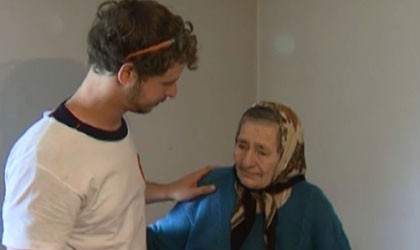
Finally, along with their broad-based humanitarian efforts, the Lev-Echad-Shalem delegation managed to make personal connections with some of the residents of the areas most affected by the floods. “Young Israelis made a real impression on the elderly who live there,” said Alon. In one case, an elderly man brought the volunteers a bottle of rakija, the local liquor, as a thank-you gift, and recalled the Jewish doctor who used to care for him before the Holocaust. “That comparison really drove home the national charge to serve as ‘a light onto the nations,’” said Alon. Gal agreed, adding, “When we saw how much the people appreciated our help, the obligation felt like a privilege. That’s the proof that we were doing something right.”


