
Multiple Gifts Advance the Vision of an Innovative, Broad-Based Education for Israel
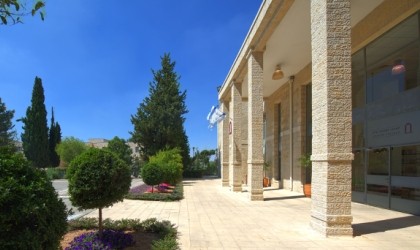
An increasing number of individuals and foundations are partnering in Shalem’s innovative vision of providing an elite, broad-based education to Israel’s best and brightest young minds. This spring alone, gifts totaling nearly $3 million significantly advanced the Campaign for Shalem College as the institution gears up for its opening on October 6th of this year.
Heather Reisman and Gerald Schwartz, leading members of the Toronto Jewish community, made an unrestricted gift of $500,000 to Shalem College, which will serve as a match to the Tikvah Fund’s historic $12.5 million challenge grant. Known for their work through the Heseg Foundation, which awards scholarships and living stipends to lone soldiers who have completed their military service in the Israel Defense Forces, Reisman and Schwartz view Shalem College as a natural extension of their belief that academic excellence holds the key to creating a strong and vibrant Israeli society.
The Maimonides Fund has also recommended a gift to Shalem College, renewable for up to four years to a maximum of $500,000. Led by Mark Charendoff, the Fund focuses on enhancing Jewish identity in North America and advancing education in Israel. Most important, the Fund aims not merely to contribute to important causes in the Jewish world, but also to take an active role in solving problems. Mr. Charendoff noted that Maimonides Fund donors attempt to identify organizations that address problems at their roots—such as Shalem College, which seeks to fill a gap in Israeli higher education by providing an interdisciplinary undergraduate degree to Israel’s future leading citizens.
Daniel Gordis, Shalem Senior Vice President and Koret Distinguished Fellow, remarked on the significance of these two gifts, explaining that “both the Schwartz-Reisman and Maimonides foundations are standard-bearers for highly effective, outcome-oriented philanthropy in the Jewish world. Their partnership with Shalem attests to not only their belief in our vision, but also our ability to make good on our mission, and change the very fabric of Israeli society for the better.”
Finally, an anonymous foundation recently established a $480,000 scholarship fund that will support two students each year from Israel’s periphery. These students, who have demonstrated both academic merit and commitment to public service, will receive full tuition and living stipends for each of the four years of their degree. The gift will apply to students in Shalem’s first three classes. Shalem President Martin Kramer emphasized the importance of this contribution, noting that “scholarships are the lifeblood of any institution of higher education. On the most basic level, they reward students for exceptional performance, enable students who would not otherwise be able to avail themselves of a first-class education to do so, and instill in recipients a sense of pride and motivation that becomes self-fulfilling.” But, he added, scholarships also provide universities and colleges with less-visible benefits, such as helping them compete in the recruitment of top-notch scholars and put together a more diverse student body.” For all these reasons, Kramer concluded, “we hope that a growing number of our potential partners will fund student scholarships as a means of ensuring Shalem’s long-term success and impact on the Jewish state.”


