
Bernard Lewis donates part of extensive personal library to Shalem College
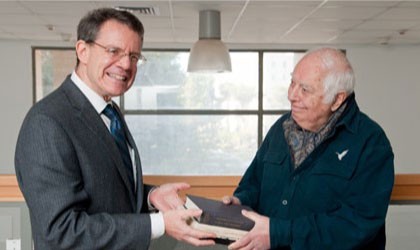
Influential scholar of Islam Professor Bernard Lewis visited Shalem on January 14 to tour the site of the college library, future home of part of his extensive personal book collection on the Middle East. Accompanied by Shalem College President Martin Kramer and Chair of the Middle East and Islamic Studies (MEIS) Department Professor Yitzhak Hasson, Professor Lewis learned how the MEIS program will follow the path he himself blazed over the course of his storied career by emphasizing the history of ideas and attitudes in Islam’s complex relationship with the West. Students choosing the MEIS major, Kramer explained, will be challenged to go beyond contemporary Arab politics and strategic studies, and probe the intellectual, social, and economic history of the region. That way, concluded Kramer, Shalem students will be able to fit their knowledge of the Middle East and Islam into a detailed and comprehensive whole, and boast a richer, more nuanced understanding of the volatile region.
In addition to the Bernard Lewis and other specialized book collections, the Shalem College library will feature significant permanent holdings and digital access to the world’s leading online sources for research and information. Librarian Arlene Keehn, charged with developing, building, and maintaining the library’s collection, stated that the Shalem library will strive to strike the right balance between a top collection designed with the unique curriculum of the college in mind, and one that anticipates future intellectual inquiry. “In keeping with the spirit of the college as a whole, the Shalem library will respond to the evolving innovations in library technology and the ever-changing needs of academic research with an open yet critical mind,” said Keehn. “We’ll keep our focus squarely on the particular experience of the individual student, while at the same time always seeking ways to engage the wider research community through sharing and collaboration.”


