
Shalem Lecturer’s Book on Classical Rabbinic Attitudes Toward Honor and Humility Wins Prestigious Literary Award
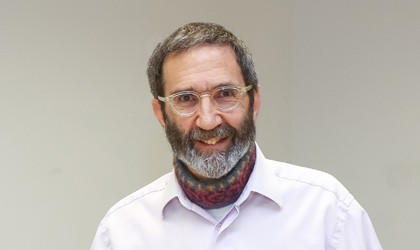
The tension between privilege, position, and authority on the one hand, and equality on the other is as old as human society. When social and spiritual leadership is concentrated in the same hands, the tension becomes especially acute. Dr. Richie (Shmuel) Lewis, Shalem lecturer in rabbinic thought, explores the talmudic treatment of this sensitive issue in a recent book, which has just been awarded the Matanel Prize, given to the best book in Jewish thought for 2013-2014 by the World Union of Jewish Studies.
And Before Honor – Humility: The Ideal of Humility in the Moral Language of the Sages (Hebrew), published by the Hebrew University’s Magnes Press, weaves together close textual readings with broad conceptual analysis to reveal philosophical insights in texts that were, until now, considered merely didactic. Praised by the Matanel judges—under the chairmanship of Israel Prize laureate Prof. Moshe Idel—as “a fascinating tapestry of historical-cultural contextualization,” the book focuses on four sugiyot (subjects of inquiry): haughtiness of spirit and lowliness of spirit, the humility of the Holy One, humility and irascibility, and the ineluctable tension between the honor of Torah and human dignity. The book also includes a series of comparisons with parallel conceptions in ancient Greek thought.
Before coming to Shalem, Lewis was a Tikvah Fellow at the Center for Law and Jewish Civilization at the New York University School of Law. His previous publications include a book on 20th–century halachic attempts to solve the growing problem of women refused a bill of divorce by their husbands. Now, he hopes to continue the research presented in his latest book by investigating “whether rabbinic literature imagines there will be hierarchical structures in the world-to-come. In our idiom, we might say, ‘Do the Sages think the ends of religion require the end of politics?’” he explains. “The Matanel Prize is a sign of encouragement that these sorts of subjects have a scholarly audience here in Israel. I’m grateful for that and excited by it.”