Acclaimed Scholar of War Azar Gat Becomes New Chair of the Department of Strategy, Diplomacy, and Security
“Everyone asks how Israel could have been so surprised by October 7th,” says Prof. Azar Gat, the Ezer Weizmann Chair of National Security at Tel Aviv University, academic advisor to the executive director of its prestigious Institute for National Security Studies (INSS), and—as of October 2026—the new chair of Shalem’s Department of Strategy, Diplomacy, and Security. “But the truth is, all surprise attacks that initiated wars during the twentieth century caught the adversary unprepared. For every sign that in retrospect seems as clear as daylight, there were highly plausible alternative explanations at the time.”
Gat’s claim—presented in one of his many articles for a general audience since the Hamas attack—fits a long pattern in his scholarly writing: a counter to the received wisdom on war and military history. His fourteenth and most recent book, Military Theory and the Conduct of War, was even described by a reviewer in Foreign Affairs as expressing skepticism “of military theory altogether.”
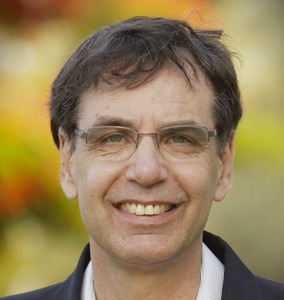
Prof. Azar Gat
Certainly, this penchant for challenging the status quo is evident in one of his 2024 essays for the INSS, in which he discusses the IDF’s relationship to technology. In opposition to the post-October 7 argument that an over-reliance on technology led to a dangerous reduction in the number of the IDF’s field formations, Gat argues that the IDF should invest more in the technologies key to its battlefield advantage. After all, he insists, these technologies—alongside the determination of Israel’s soldiers—were the key to the IDF’s exceptional success in fighting the war in Gaza and on other fronts. Israel has had the same number of field divisions during the current war—six to seven—as it had during the Yom Kippur War, when the country faced twenty Arab divisions and some 4,000 enemy tanks. At the height of its mobilization during the Iron Swords War, Israel deployed around half a million troops, compared to about 30,000 each for Hamas and Hezbollah.
It’s a position that’s hotly contested. Gat is delighted by the debate.
“War is something that’s constantly changing,” he says. “Those of us who study it need always to have our finger on the pulse, and always to reevaluate what we thought we knew.” If anything, he adds, the events of October 7 have made interrogating fundamental assumptions even more important.
He plans to help students do exactly that in his new role at Shalem.
“Shalem is a wonderful place to teach,” says Gat, who is a three-time winner of the prestigious Humboldt Prize, a Fulbright Scholar, and the 2019 recipient of the EMET Prize, often considered Israel’s Nobel. “The environment is optimistic, the seminars are intimate, and the students are high-quality and open to new ideas. These are the perfect conditions for exploring the critical questions October 7 raised.”
Gat adds that since Shalem is the only institution in Israel to offer a bachelor’s degree in strategy, diplomacy, and security, it’s a unique opportunity to help tomorrow’s leaders in these fields build a “strong yet flexible” intellectual foundation that will serve them—and their country—well in their careers. The degree’s foundation in the humanities is also a critical advantage, as it makes the craft of strategy and diplomacy more nuanced, contextual, and human.
As for the foundation for his own four-decades-long career, which includes research and teaching fellowships at Yale, Oxford, and Georgetown, and, as a Koret fellow, at Stanford’s Hoover Institute, Gat traces it back to the late spring of 1967. It was then, he explains, that he and his fellow second graders were drilled in what to do in the event of air strikes.
“Some of my earliest memories are of that palpable tension,” Gat says of the weeks preceding what would become the Six-Day War. “On the morning of the second day of the war, I found my mom reading a newspaper whose headline was ‘Israel destroys 400 Arab planes.’ Rather than being scared about what was about to happen, I was fascinated. I wanted to know more.”
Most of all, Gat says, he’s grateful that he never lost that sense of fascination. “Now, I’m excited to share that passion with my students at Shalem.”