Home and Homeland: Jewish and Western Views

A Shalem College Master Class
Sunday, May 19—Wednesday, May 22, 2024
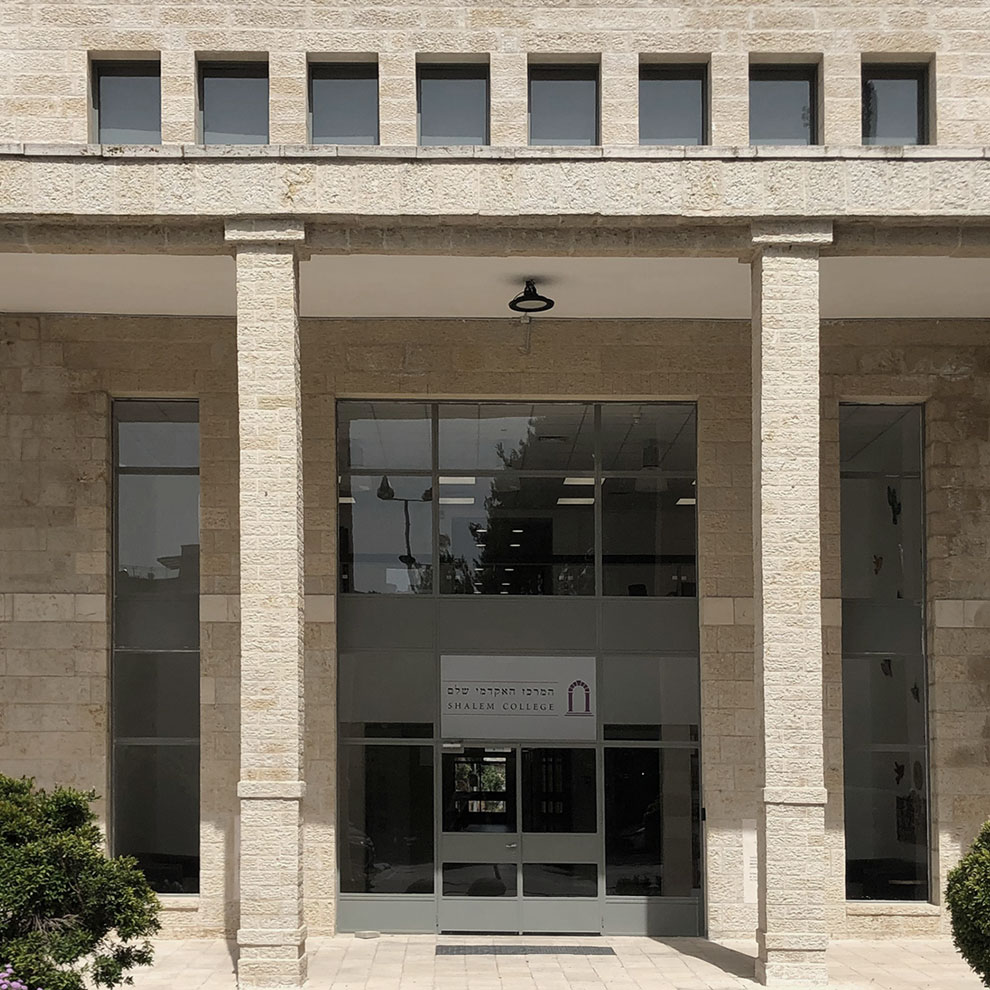
Shalem College, Jerusalem

Experience Shalem’s unique approach to education in this rare opportunity to learn in an intimate setting with the finest scholars and teachers of Shalem College

Course Overview

The events of October 7 and its aftermath have encouraged Jews in Israel and the Diaspora to think deeply about the nature of the Jewish homeland and the very idea of home. What do Jewish texts and the texts of the West say about the nature of home? What does it mean to feel at home or yearn for home when we are away? Where do Jews belong? Where do we feel most at home? What is the future of the Jewish homeland?

Come to Shalem College for a deep dive into the ideas of home and homeland. We will sit together in intimate conversation and deep exploration, reading great texts from the Jewish tradition and beyond as we discuss the human desire for home and homeland. Led by master teachers from Shalem College, we will explore the meaning of these texts and their significance for our lives.

To see the full schedule, click here.

Day 1The Jewish Connection to the Land

What is the Bible about? A search for the essence of Judaism

Daniel Gordis

Return to the Bible or abandon it? How Jewish statehood has complicated Jewish identity.

Daniel Gordis

Jewish Roots in the Land — Excursion to the Israel Museum

Lihi Sapir and Stav Lavon

Day 2The Nature of Home

Greeting Strangers at Your Door: Hospitality in the Book of Genesis

Leon Kass

The Challenges of Homecoming: From the Odyssey to Haim Guri

Ido Hevroni

Where the Heart Finds Home: Poems of W.B. Yeats and Donald Hall

Annie Kantar Ben-Hillel

Day 3The State of Israel as Homeland

Herzl’s Journey Home

Daniel Polisar

Israel’s Declaration of Independence: A Close Reading

Assaf Inbari

Summing up: The Power of Belonging

Russ Roberts

Faculty

Daniel Gordis is Koret Distinguished Fellow at Shalem College. He is the author of 13 books and the widely read blog/podcast, “Israel from the Inside.” Gordis’s book, Israel: A Concise History of a Nation Reborn, was named the 2016 National Jewish Book Award’s “Book of the Year.” Gordis’ writing has appeared in magazines and newspapers including The New York Times, The New Republic, The New York Times Magazine, Azure, Commentary Magazine, TIME, The Atlantic and Foreign Affairs. Gordis’ most recent book, Impossible Takes Longer: 75 Years After its Creation, Has Israel Fulfilled Its Founders’ Dreams?, was awarded Yeshiva University’s Rabbi Sacks Book Prize for 2023.

Ido Hevroni is the Director of Teaching Excellence and a senior lecturer at Shalem College, as well as its founding educational director. He is a scholar of rabbinic literature and teaches Talmud and Midrash, classical literature and theories of depth psychology. In addition to his book, Holy Beings: Wild Creatures in the Rabbinic Academy (Yedioth Ahronoth Books, 2016), he has authored numerous academic articles, and his writing has been featured in Azure, Mosaic, HaAretz, Ynet and Makor Rishon. Hevroni has lectured in many pre-army academies, as well as to soldiers on the front lines during Israel’s current war. Alongside his work as a teacher and a researcher, Hevroni reconstructs ancient weapons to more fully understand ancient stories. Among his reconstructions are Odysseus’s sword, Judah Maccabee’s sword, and the Menorah of the Hasmoneans, which was originally made of their spearheads.

Assaf Inbari is a lecturer in the Core Curriculum Department and is the Asper Chair in Zionist Studies at Shalem College. An author, essayist, and literary critic, he is the winner of the prestigious Agnon Prize for his novels The Tank and Home, the latter of which was nominated for the Sapir Prize, Israel’s leading literary honor. His newest book, The Red Book, explores the development of the ideas of Israel’s leading thinkers on the political left in the early years of statehood. An expert on the poet Haim Nahman Bialik in particular and early Zionist thought in general, his writing is concerned with defining a unique Hebrew literature and culture.

Annie Kantar Ben-Hillel is a poet, translator, and the director of the English Studies Program at Shalem College. The recipient of an American Academy of Poets Prize and Fulbright Scholarship, her English translation of the poet Leah Goldberg’s book With This Night (University of Texas Press, 2011) was short-listed for the American Literary Translators Association award. Her poems and translations have appeared in venues such as The American Literary Review, Literary Imagination, Poetry Daily, Rattle, Tikkun, and many others. Along with her work in language instruction, Kantar Ben-Hillel has led creative writing and translation workshops at numerous universities, including Bar-Ilan University, the University of Maryland, the University of Pennsylvania, and Yale University.

Leon Kass is dean of the faculty at Shalem College, professor emeritus in the Committee on Social Thought at the University of Chicago, and scholar emeritus at the American Enterprise Institute in Washington, DC. Kass has been involved from the earliest stages in developing the ideas and educational philosophy behind Shalem College. A lifelong enthusiast of liberal education, Leon was trained in medicine and biochemistry before shifting from the practice of science to thinking about its meaning, a process recognized by his appointment as chairman of the President’s Council on Bioethics from 2001 – 2005. Kass is the author of 11 books on subjects ranging from the human condition and bioethics to biblical exegesis and liberal education. His latest book is Reading Ruth: Birth, Redemption, and the Way of Israel, co-authored with his granddaughter, Hannah Mandelbaum.

Stav Lavon is an associate curator for museum education in the Ruth Youth Wing for Art Education in the Israel Museum, Jerusalem. She has a bachelor’s degree in Archeology and Art History, and a master’s degree in Art History in the Hebrew University of Jerusalem. She is currently working on her PhD.

Daniel Polisar is Executive Vice President and co-founder of Shalem College. Polisar served as president of the Shalem Center from 2002-2013, after holding posts as director of research, academic director, and editor-in-chief of the center’s journal Azure. Before joining Shalem, he was founder and director of Peace Watch, a non-partisan organization monitoring Israeli and Palestinian compliance with the Oslo Accords, and head of the Peace Watch observer team during the January 1996 Palestinian elections. Since 2005, he has served on the board of Metzilah, the Center of Zionist, Jewish, Liberal and Humanist Thought, and in 2006, he was appointed by the prime minister to be the first chairman of the National Herzl Council, responsible for commemorating the legacy of Theodor Herzl, a position he held for three years.

Russ Roberts became president of Shalem College in 2021. An economist, he is the John and Jean De Nault Research Fellow at Stanford University’s Hoover Institution and the host of EconTalk: Conversations for the Curious, a weekly podcast he began in 2006. In addition to academic articles and essays for the popular press, he is the author of six books including three novels that teach economic principles. His latest book is Wild Problems: A Guide to the Decisions That Define Us (Portfolio/Penguin, 2022). His two rap videos on Keynes and Hayek (with filmmaker John Papola) have been viewed over 13 million times and are used in classrooms around the world.

Lihi Sapir is a senior curator in the Department of Continuing Education for Educators at the Israel Museum, Jerusalem. She has over 35 years’ experience in teaching at the Museum, where she specializes in the development and facilitation of professional conferences, seminars, and workshops in Israeli and international art; lectures and other enrichment programs for the general public; and the direction of teams engaged in museum education. Sapir has also served as an editorial board member and author for Platform and Glasses, journals of museum education published by the Israel Museum, Jerusalem.

Reserve Your Seat
at the Seminar Table

Participation in this intimate cohort is limited. Interested participants are invited to reach out to Rachel Jacobson Gold, Vice President of Fund Development,  at [email protected] or (+972) 58-627-4856 for more details and to reserve your spot.

Schedule

Sunday May 19

6:00 pm – 9:00 pmOpening dinnerHosted by Mem Bernstein

Monday May 20

10:30 am – 12:00 pmSession 1What is the Bible about? A search for the essence of Judaism
Daniel Gordis
12:00 pm – 1:00 pmLunch 
1:00 pm – 2:30 pmSession 2Return to the Bible or abandon it? How Jewish statehood has complicated Jewish identity.
Daniel Gordis
2:45 pm – 5:45 pmSession 3Jewish Roots in the Land — Excursion to the Israel Museum
Lihi Sapir and Stav Lavon

Tuesday May 21

9:00 am – 10:30 amSession 1Greeting Strangers at Your Door: Hospitality in the Book of Genesis
Leon Kass
10:30 am – 11:00 amBreak
 
11:00 am – 12:30 pmSession 2The Challenges of Homecoming: From the Odyssey to Haim Guri
Ido Hevroni
12:30 pm – 1:30 pmLunch 
1:30 pm – 3:00 pmSession 3Where the Heart Finds Home: Poems of W.B. Yeats and Donald Hall
Annie Kantar Ben-Hillel
6:00 pm – 9:00 pmDinnerA culinary experience in a Machane Yehuda atelier, followed by conversation with Shalem College graduates

Wednesday May 22

9:00 am – 10:30 amSession 1Herzl’s Journey Home
Daniel Polisar
10:30 am – 11:00 amBreak 
11:00 am – 12:30 pmSession 2Israel’s Declaration of Independence: A Close Reading
Assaf Inbari
12:30 pm – 2:00 pmLunch 
2:00 pm – 3:30 pmSession 3Summing up: The Power of Belonging
Russ Roberts
6:00 pmWine and sushi gathering (optional)Hosted by Russ and Sharon Roberts 

Reserve Your Seat
at the Seminar Table

Participation in this intimate cohort is limited. Interested participants are invited to reach out to Rachel Jacobson Gold, Vice President of Fund Development, at [email protected] or (+972) 58-627-4856 for more details and to reserve your spot.